
SEO Audit: Find What’s Stopping Your Website From Ranking
Learn what an SEO audit is, why it matters, and how to perform a complete SEO audit to improve rankings, traffic, and website performance.
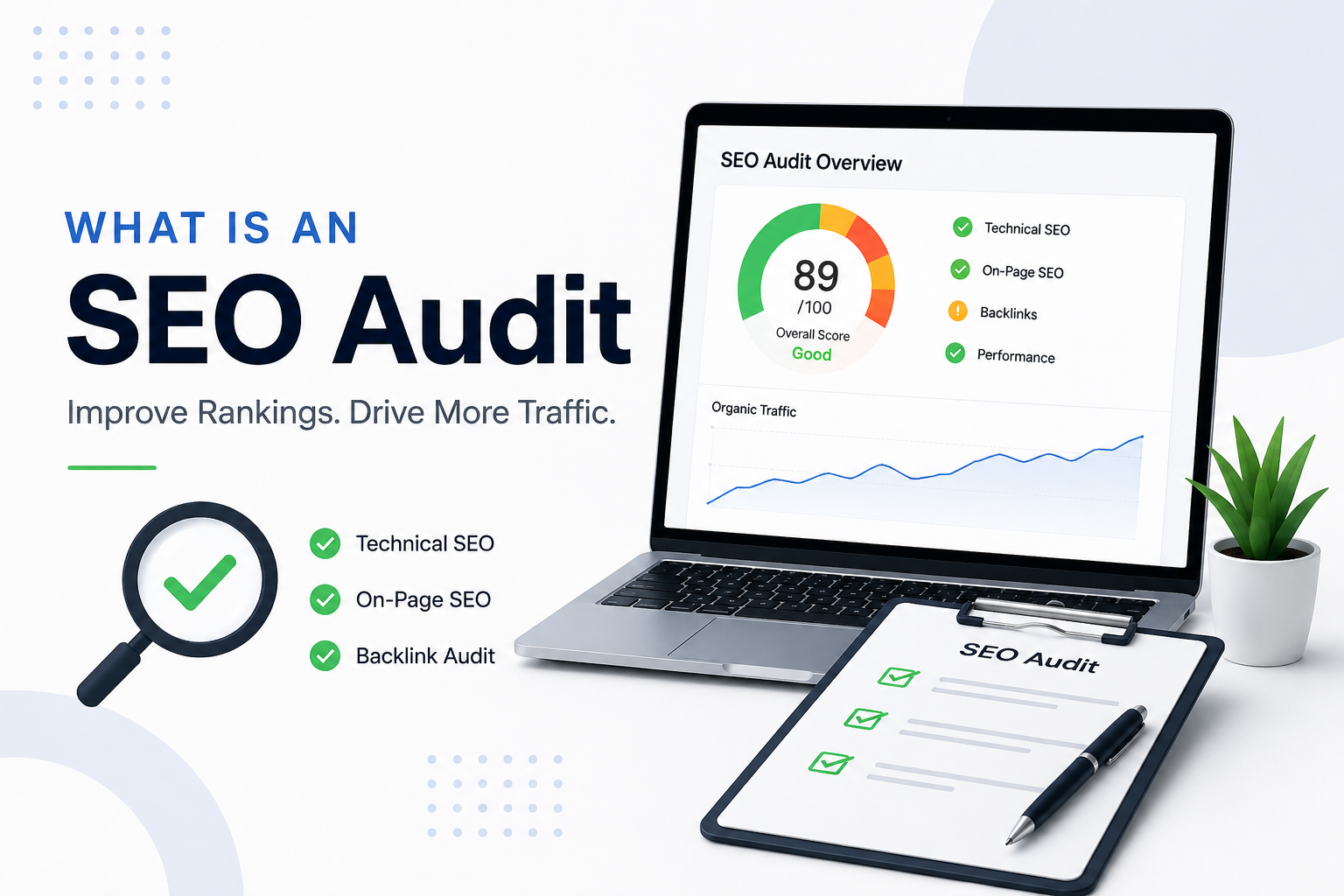
If your website isn’t generating the organic traffic you expected, the problem may not be your content—it could be hidden SEO issues holding your site back.
That’s where an SEO audit comes in.
An SEO audit is a comprehensive evaluation of your website’s performance in search engines. It helps identify technical problems, content gaps, indexing issues, and backlink weaknesses that could prevent your pages from ranking higher on Google.
Whether you’re running a small business website, an e-commerce store, or an enterprise platform, regular SEO audits can help improve visibility, increase organic traffic, and uncover opportunities for long-term growth.
According to Google’s Search Central documentation, search engines rely on proper crawling, rendering, and indexing to understand and rank web pages. If Google can’t access or interpret your content correctly, even the best pages may struggle to rank.
Why Are SEO Audits Important?
Many website owners focus on creating content and acquiring traffic without checking whether their site is technically optimized.
An SEO audit helps answer critical questions:
- Can search engines crawl my website properly?
- Are my pages being indexed?
- Is my content targeting the right keywords?
- Are technical issues affecting performance?
- Does my backlink profile support higher rankings?
Regular audits help identify hidden problems before they negatively impact traffic and conversions. They also uncover optimization opportunities that competitors link building strategies may have overlooked.
SEO Audit Checklist: What Should Be Reviewed?
A comprehensive website SEO audit should examine three key areas:
1. Technical SEO
Technical SEO ensures search engines can access, crawl, and index your website efficiently.
Key areas to review include:
- Crawl errors
- Broken links
- XML sitemap
- Robots.txt file
- HTTPS security
- Mobile responsiveness
- Core Web Vitals
- Page speed
Google Search Console provides valuable insights into indexing issues and crawl errors.
2. On-Page SEO
On-page SEO focuses on optimizing individual pages for search visibility.
Important elements include:
- Title tags
- Meta descriptions
- Header structure
- Keyword usage
- Internal linking
- Image optimization
- Content quality
Every page should have a clear focus keyword and satisfy user search intent.
3. Off-Page SEO
Off-page SEO evaluates your website’s authority and reputation.
This includes:
- Backlink quality
- Referring domains
- Anchor text distribution
- Brand mentions
- Competitor link analysis
A strong backlink profile remains one of the most influential ranking factors in competitive search results.
How to Perform an SEO Audit
Step 1: Check Indexing Status
The first step is confirming that important pages are indexed by Google.
Using Google Search Console, review:
- Indexed pages
- Excluded pages
- Crawl issues
- Sitemap coverage
If key pages are not indexed, they cannot generate organic traffic regardless of content quality.
Step 2: Review Technical Performance
Technical SEO issues can significantly impact rankings and user experience.
Areas to analyze include:
Website Speed
Slow-loading pages increase bounce rates and reduce conversions.
Use Google PageSpeed Insights to identify performance issues.
Suggested Screenshot: Add a PageSpeed Insights report image here.
Core Web Vitals
Core Web Vitals measure real-world user experience and performance.
Focus on:
- Largest Contentful Paint (LCP)
- Interaction to Next Paint (INP)
- Cumulative Layout Shift (CLS)
Improving these metrics often leads to better engagement and stronger SEO performance.
Step 3: Audit Content Quality
Content remains a core component of SEO success.
Review your pages for:
- Thin content
- Outdated information
- Duplicate content
- Keyword cannibalization
- Missing keyword opportunities
Ask yourself:
“Does this page provide the best answer available for the target search query?”
If the answer is no, improvements are likely needed.
Step 4: Analyze Internal Linking
Internal links help search engines understand the relationship between pages.
Benefits include:
- Improved crawlability
- Better authority distribution
- Enhanced user experience
For example, if you’re discussing technical SEO, linking to related resources such as keyword research, content strategy, or an SEO audit service page can strengthen topical relevance.
Why Backlink Audits Matter in SEO Audits
Many websites fix technical issues but still struggle to improve rankings.
The reason is often authority.
Google evaluates backlinks as signals of trust and relevance. If competing websites have stronger backlink profiles, they may continue to outrank you even when your content is excellent.
A backlink audit helps identify:
- Lost backlinks
- Toxic links
- Competitor link gaps
- New link building opportunities
This is where strategies such as guest posting, digital PR, and authority link building can play a significant role.
After technical and on-page issues are resolved, many businesses focus on acquiring high-quality editorial links from relevant websites to strengthen domain authority and improve search visibility.
Best SEO Audit Tools
Several tools can simplify the auditing process.
| Tool | Best Use |
|---|---|
| Google Search Console | Indexing & Crawl Analysis |
| Google Analytics | Traffic Insights |
| Screaming Frog | Technical SEO Audits |
| Ahrefs | Backlink Analysis |
| Semrush | Site Health Monitoring |
| PageSpeed Insights | Speed Optimization |
Using a combination of these tools provides a complete view of your website’s SEO performance.
Common SEO Issues Found During Audits
Some of the most common problems discovered during website SEO audits include:
- Slow page speed
- Broken internal links
- Missing title tags
- Duplicate content
- Poor mobile usability
- Crawl errors
- Thin content
- Weak backlink profiles
Addressing these issues often results in measurable improvements in organic traffic and rankings.
Final Thoughts
An SEO audit is one of the most effective ways to uncover opportunities for improving website performance and organic visibility.
By reviewing technical SEO, content quality, user experience, and backlink strength, businesses can identify what’s preventing them from reaching their full search potential.
Regular audits help ensure your website remains aligned with search engine best practices while creating a stronger foundation for long-term growth.
While technical fixes and content improvements are essential, businesses operating in competitive markets should also consider authority-building strategies such as guest posting and high-quality link acquisition to maximize the impact of their SEO efforts.
When combined, technical optimization and strategic link building create a sustainable approach to improving rankings, traffic, and conversions.
Updated